Hands-on start
Gather, build, and learn the island by doing.
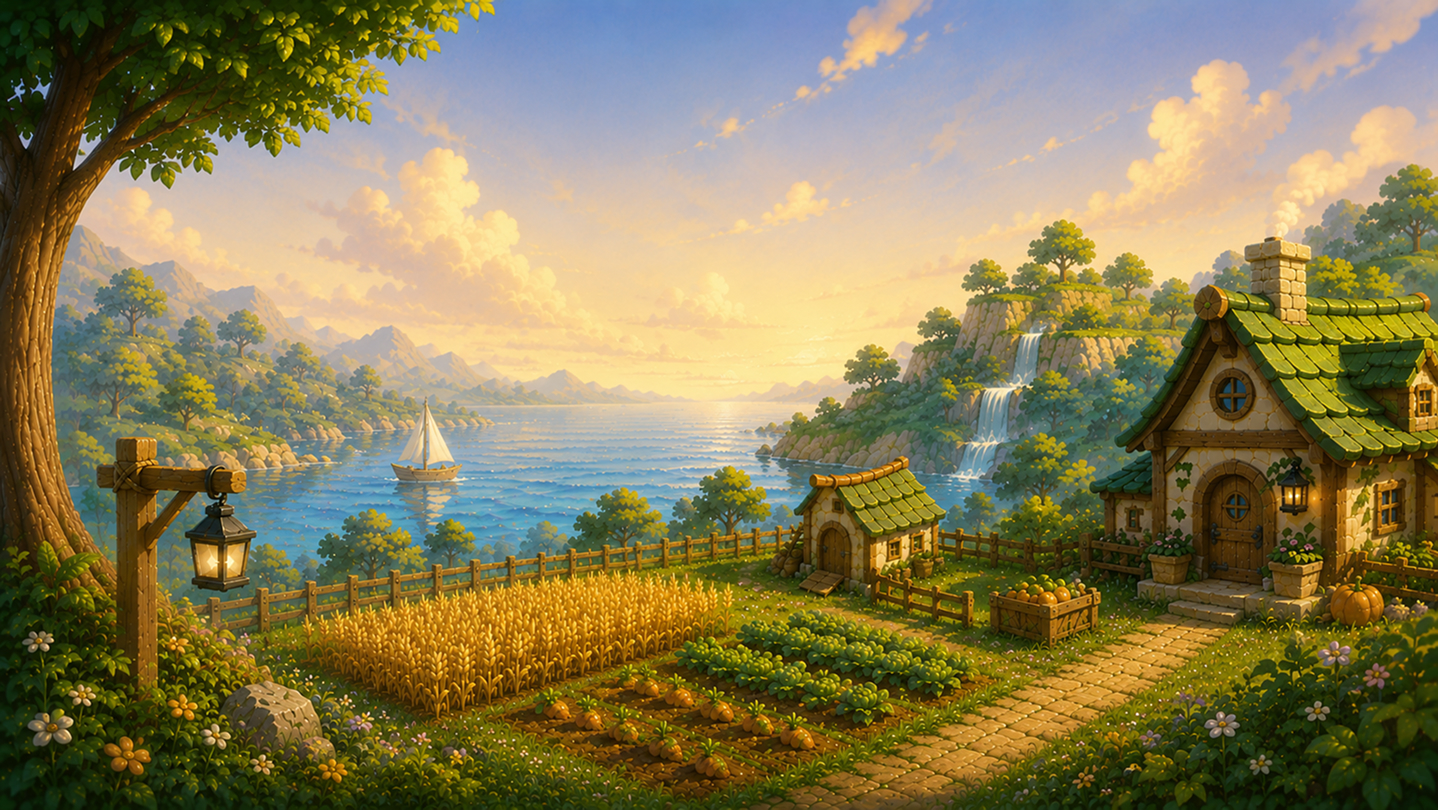
Cozy island building, living systems, gentle automation
Start with gathering, farming, and carrying supplies by hand. As your island grows, unlock workshops, storage, logistics, defenses, electricity, and automation that keep resources moving while the settlement becomes a place of its own.
Hands-on start
Gather, build, and learn the island by doing.
Living systems
Placement, ecology, needs, and threats shape every plan.
Automation path
Later tools reduce repetition without removing the work.
Dungeons & travel
Leave the shore, face enemies, explore deeper spaces, and bring discoveries home.
Overview
Calmaria looks peaceful, but every building, crop, tool, and production step matters. Your first days are about turning a quiet island into a useful home. After that, the challenge becomes keeping the whole settlement supplied, protected, and ready for the next shore.
01
Place farms, wells, workshops, storage, defenses, and production buildings to turn raw resources into useful supplies. A good layout is not just pretty - it helps the island survive.
02
Moisture, fertility, pollution, trees, wells, crops, and industry all affect the land around them. Healthy placement can improve your harvests, while careless expansion can weaken the ground you depend on.
03
Follow quests, unlock technologies, craft better tools, improve your production, and choose which part of the settlement should grow next: food, defense, exploration, logistics, or automation.
04
Worms, snails, mites, and other island creatures can target your crops, fences, buildings, and players. Your settlement becomes more valuable as it grows - and more worth defending.
Core loop
Every loop should leave your island stronger than before. You gather what the land gives you, turn it into better supplies, unlock new options, protect the systems you built, and prepare for the next project.
01
Harvest wood, leaves, wheat, stone, water, and creature drops to keep your first tools, buildings, and recipes moving.
02
Plant crops, care for the land, use water and fertility wisely, and learn how your layout affects the quality of every harvest.
03
Feed resources into mills, bakeries, workshops, coops, greenhouses, and other producers to build chains that can support longer days and bigger goals.
04
Spend technology points, complete island goals, craft better equipment, and open new routes through farming, production, defense, exploration, and automation.
05
Build fences, load towers, repair damage, and respond to enemy waves before creatures chew through your crops, storage, or production buildings.
06
Prepare supplies, build toward the shore, explore new islands, search for loot, and discover resources that can change what your settlement can become.
Production
The first island days are personal: a few crops, a stack of wood, a trip to the well. Later, the same humble routines become smoother as buildings, storage, upgrades, and automation take over the chores you have already mastered.
Route 01
Early work is direct and personal. You collect what you need, bring it home, and learn which chores are worth making smoother before the island grows larger.
Route 02
Where you place things matters. A thoughtful settlement makes daily work feel natural, keeps important places close, and leaves room for later expansion.
Route 03
New options should not only add more to do. They should change how you think about the island, which tasks you repeat, and what your next goal needs from the settlement.
Route 04
Basic buildings can run on simple fuel, but stronger upgrades start asking for better power. Later, electric poles and diamond generators turn energy into another settlement system to plan, balance, and protect.
Route 05
Survival pressure and island threats show where your setup is fragile. A better settlement is not just bigger; it is easier to maintain when something goes wrong.
Route 06
Automation arrives after you understand the work. The goal is not to skip the island, but to let the systems you built handle the repetition while you focus on bigger plans.
Technology
Calmaria does not hide the future from you. The technology tree shows where your settlement can go next, but reaching those goals takes resources, production, preparation, and real progress in the world.
Unlock buildings, recipes, storage, and processing options that turn basic resources into reliable chains.
Build fences, towers, ammunition, and tools that help protect crops and production from island creatures.
Work toward docks, boats, caves, loot, and new island goals that expand the world beyond your first shore.
Begin with hands-on work, then grow toward helpers, storage, transport, electric poles, powered buildings, and systems that take over repetitive jobs.
World
Calmaria is warm in tone, but the world is not passive. The land reacts to what you build, creatures threaten what you grow, and each new shore can change the way your settlement works.
Every island has its own environmental character. Fertile land rewards farming, rougher terrain favors industry, and building placement can improve or damage the local balance.
Food, water, poison, health, and travel supplies create pressure without turning the game into a punishment loop. Prepare well, and the island feels calm. Ignore your needs, and quiet days can become dangerous.
Enemies do not exist only to chase the player. They can attack crops, fences, buildings, and production, forcing you to defend the systems you depend on.
New islands, caves, loot, rare materials, and future transport systems expand the game beyond the starting base. The farther you grow, the more your settlement needs planning.
Production calculator
The Calmaria production calculator is planned as a public tool for players who want to understand inputs, outputs, building counts, and resource flow. As balancing develops, it will help you test chains, compare recipes, and plan more efficient island layouts.
Follow development
Steam is the best place to follow release updates, screenshots, trailers, and launch news. If Calmaria sounds like your kind of cozy production game, wishlisting helps the project reach more players.
For development discussion, balance feedback, playtest notes, and behind-the-scenes progress, join the Discord and help shape the island before release.
FAQ
Answers to the most important questions about the game, its systems, and the production calculator.
Calmaria: Wild Growth is a cozy survival island builder about growing a small camp into a working settlement. You gather resources, farm the land, craft tools, build production chains, unlock technologies, defend your fields, and expand toward new islands.
Calmaria is cozy in tone, but it still has pressure. Hunger, thirst, poison, enemy waves, damaged crops, and limited supplies create problems to solve without turning the game into harsh survival.
Production is one of the main systems. Early chains are simple, like wheat into flour and bread. As the settlement grows, resources, storage, building upgrades, logistics, and automation become more important.
Yes. The island has environmental systems such as moisture, fertility, and pollution. Trees, wells, crops, mines, workshops, and other buildings can improve or damage the land around them, which affects farming and settlement planning.
No. Calmaria is designed around a visible technology tree, so you can plan your direction. Seeing a future technology does not mean it is immediately reachable - advanced systems still require resources, preparation, and progress in the world.
Yes. The early game is hands-on, with manual gathering, carrying, and building. Later progression introduces stronger fuel, electric power networks, and automation systems that help move supplies, feed production chains, and reduce repetitive work.
Yes. Calmaria is built around an archipelago structure, with expansion toward new shores, island goals, resources, loot, caves, and future transport systems as the world opens up.
Calmaria is designed for solo play and co-op, so players can build, gather, defend, explore, and develop the settlement together.
Yes. You can wishlist Calmaria: Wild Growth on Steam to follow release updates and support the project before launch.
The production calculator is planned as a public tool for testing resource chains, recipes, input/output ratios, and building needs. It will become more useful as the game's balancing data evolves.